Science News
 American
Science News for 27 May 2020
American
Science News for 27 May 2020
Scientists devise a way to determine the viability of predicted 2D materials
EurekAlert! - 27 May 2020 06:00
(Siberian Federal University) An international team of researchers from Russia, Sweden and South Korea has proposed a new way to test the structural stability of predicted 2D materials. The testing revealed a number of m...
First results from human COVID-19 immunology study reveal universally effective antibodies
Neuroscience News - 27 May 2020 00:29 While the amount of antibodies generated varies widely in patients who have recovered from coronavirus, most people generate at least some antibodies which are intrinsically capable of neutralizing the SARS-CoV-2 virus.
How Scientists Influenced Monkeys' Decisions Using Ultrasound in Their Brains
Singularity Hub - 27 May 2020 16:00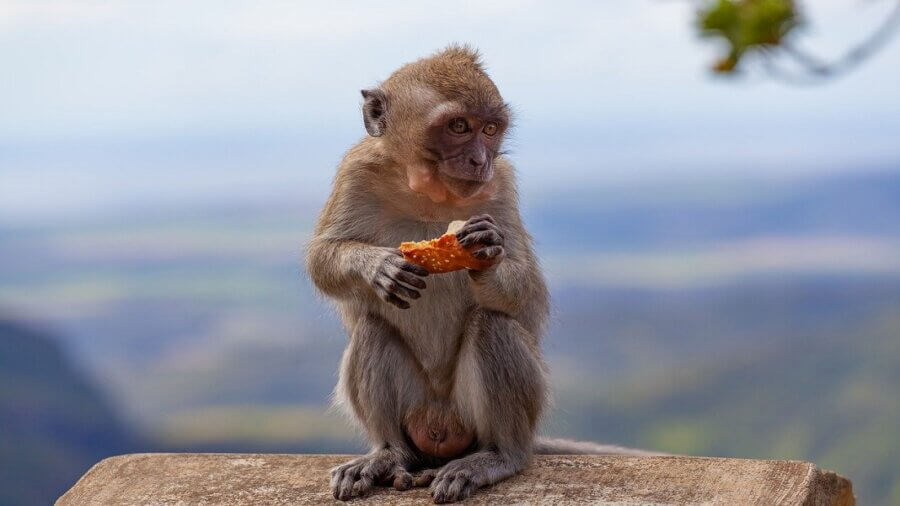 A few years ago, in a pitch black room at Stanford University, a monkey sat silently in his custom-made chair, utterly bewildered. It wasn't because of the head brace, which held his head completely still. It wasn't the ...
Ear infections discovered in remains of humans living in Levant 15,000 years ago
Science Daily - 27 May 2020 21:02
Researchers have discovered evidence of ear infections in the skull remains of humans living in the Levant some 15,000 years ago.
The amazing Antarctic discovery that could tell us how Earth was made
New Scientist - 27 May 2020 20:00
Explorers trawling the polar ice have finally unearthed a trove of precious, iron-rich space rocks that might help crack the puzzle of how our planet took shape
New understanding of RNA movements can be used to treat cancer
Science Daily - 27 May 2020 19:31
New research shows that an RNA molecule involved in preventing tumor formation can change its structure and thereby control protein production in the cell. The finding can have important clinical implications as it opens...
Surgeons study guidelines for treating cancer patients during pandemic
Science Daily - 27 May 2020 19:31
New research provides guidance on clinical decision-making in regards to treating pancreatic cancer patients during the COVID-19 pandemic.
Genomic analysis in samples of Neanderthals and modern humans shows a decrease in ADHD-associated genetic variants
Science Daily - 27 May 2020 18:33
The frequency of genetic variants associated with attention-deficit/hyperactivity disorder (ADHD) has decreased progressively in the evolutionary human lineage from the Paleolithic to the present day, according to new re...
Taking inventory of which drugs the world is using to treat COVID-19
Science Daily - 27 May 2020 18:33
New research catalogued every COVID treatment documented in medical literature so far and found physicians have reported on the use of more than 100 different off-label and experimental treatments.
Simple and readily available saline solution can reliably transport COVID-19 samples to testing labs
Science Daily - 27 May 2020 18:33
In the face of dwindling supplies of virus transport media, cheap and readily available phosphate buffered saline can be used to safely store and transport coronavirus samples for up to 18 hours, researchers report.
How do we disconnect from the environment during sleep and under anesthesia?
Science Daily - 27 May 2020 16:50
A series of new studies finds, among other important discoveries, that noradrenaline, a neurotransmitter secreted in response to stress, lies at the heart of our ability to ''shut off'' our sensory responses and sleep so...
Clues to COVID-19 in the brain uncovered in new study
Science Daily - 27 May 2020 16:50
A study reviewing neuroimaging and neurological symptoms in patients with COVID-19 may shed light on the virus's impact on the central nervous system.
Mysterious 'Fermi Bubbles' may be the result of black hole indigestion 6 million years ago
Live Science - 27 May 2020 23:28 Twin shock waves produced by the galaxy's central black hole could have inflated the gargantuan Fermi Bubbles about 6 million years ago, a new study suggests.
Study uncovers clues to COVID-19 in the brain
Neuroscience News - 27 May 2020 22:14 Altered mental state and strokes are the most common neurological symptoms associated with coronavirus infection.
Cannibal dinosaurs resorted to eating each other when food was scarce
New Scientist - 27 May 2020 21:00
Bite marks on a collection of Jurassic dinosaur bones show that allosaurus, a carnivorous dinosaur, sometimes ate its own kind, possibly because environmental conditions made other food scarce
The neural home where stress lives
Neuroscience News - 27 May 2020 20:58 Researchers have identified a hippocampal neural network that activates during stress. Activity in a hippocampal-hypothalamus network predicts greater feelings of stress, while connectivity between the hippocampus and do...
Covid-19 news: Boris Johnson admits UK was unprepared for pandemic
New Scientist - 27 May 2020 20:00
The latest coronavirus news updated every day including coronavirus cases, the latest news, features and interviews from New Scientist and essential information about the covid-19 pandemic
How a victory for a small bog could herald a new era for conservation
New Scientist - 27 May 2020 20:00
Against the odds, a tiny wildlife retreat has won the day in a battle with developers. It is a sign that attitudes may finally be changing for the better, says Graham Lawton
Climate chief: How coronavirus shows us we can beat global warming
New Scientist - 27 May 2020 20:00
Forget the naysayers: what we must do to combat climate change is far less drastic than coronavirus measures, says World Meteorological Organization head Petteri Taalas
Allosaurus cannibalized its own kind, grim new fossils reveal
Live Science - 27 May 2020 20:00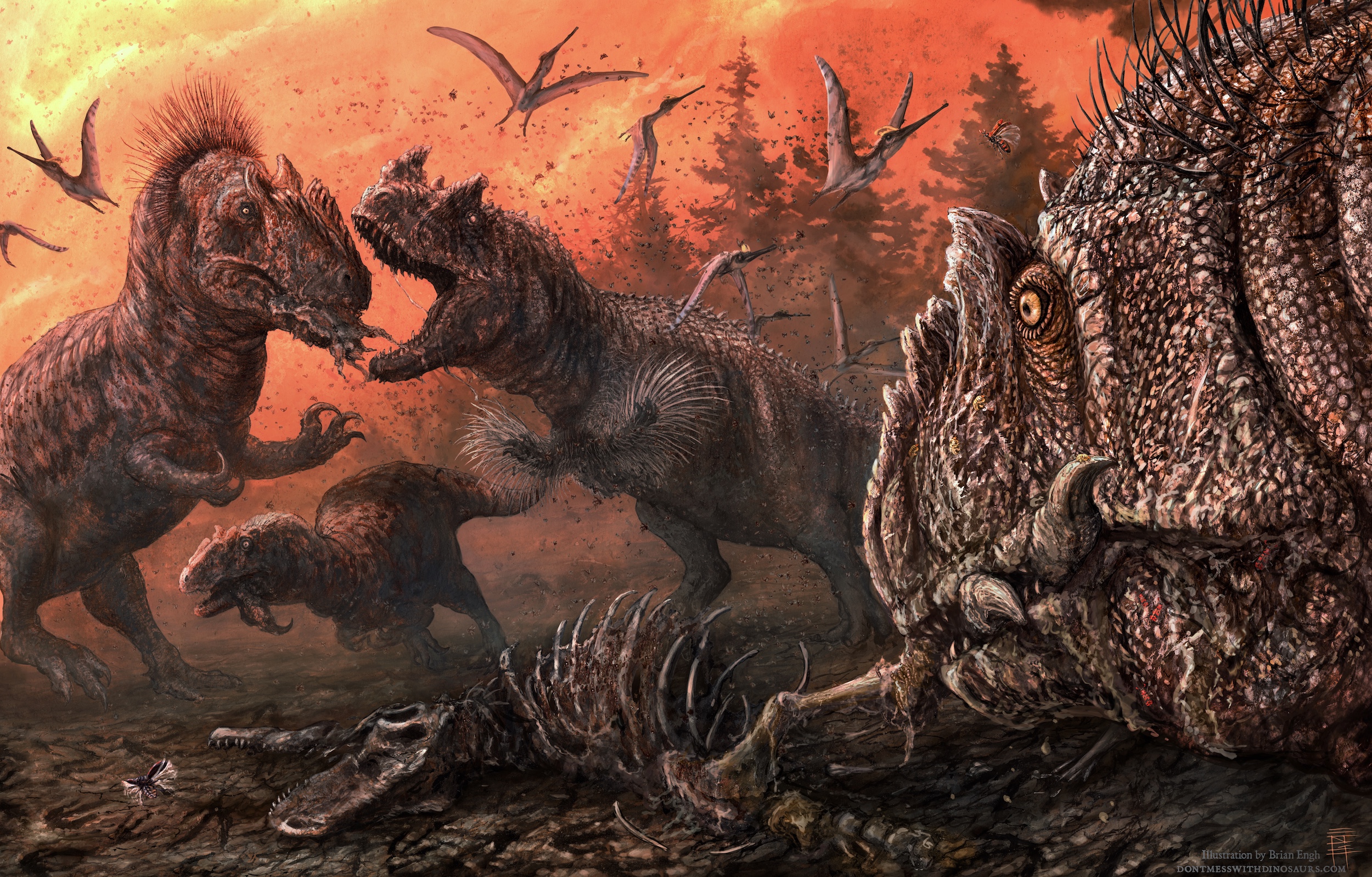 Researchers studied bite marks on more than 2,000 dinosaur bones and found that some of them were cannibalized.
We can see when your brain forms a memory by watching you move
New Scientist - 27 May 2020 19:44
Subtle patterns can be seen in people's reaction times as their memories are recalled, and boosting these brainwaves could help treat Alzheimer's disease
Ultrasonic speakers let people who are blind read Braille in mid-air
New Scientist - 27 May 2020 19:17
People who are blind can read using a device that uses ultrasonic speakers to create points in mid-air similar to the dots that form Braille characters
 Global
 Great Britain
 Indian
 South Africa